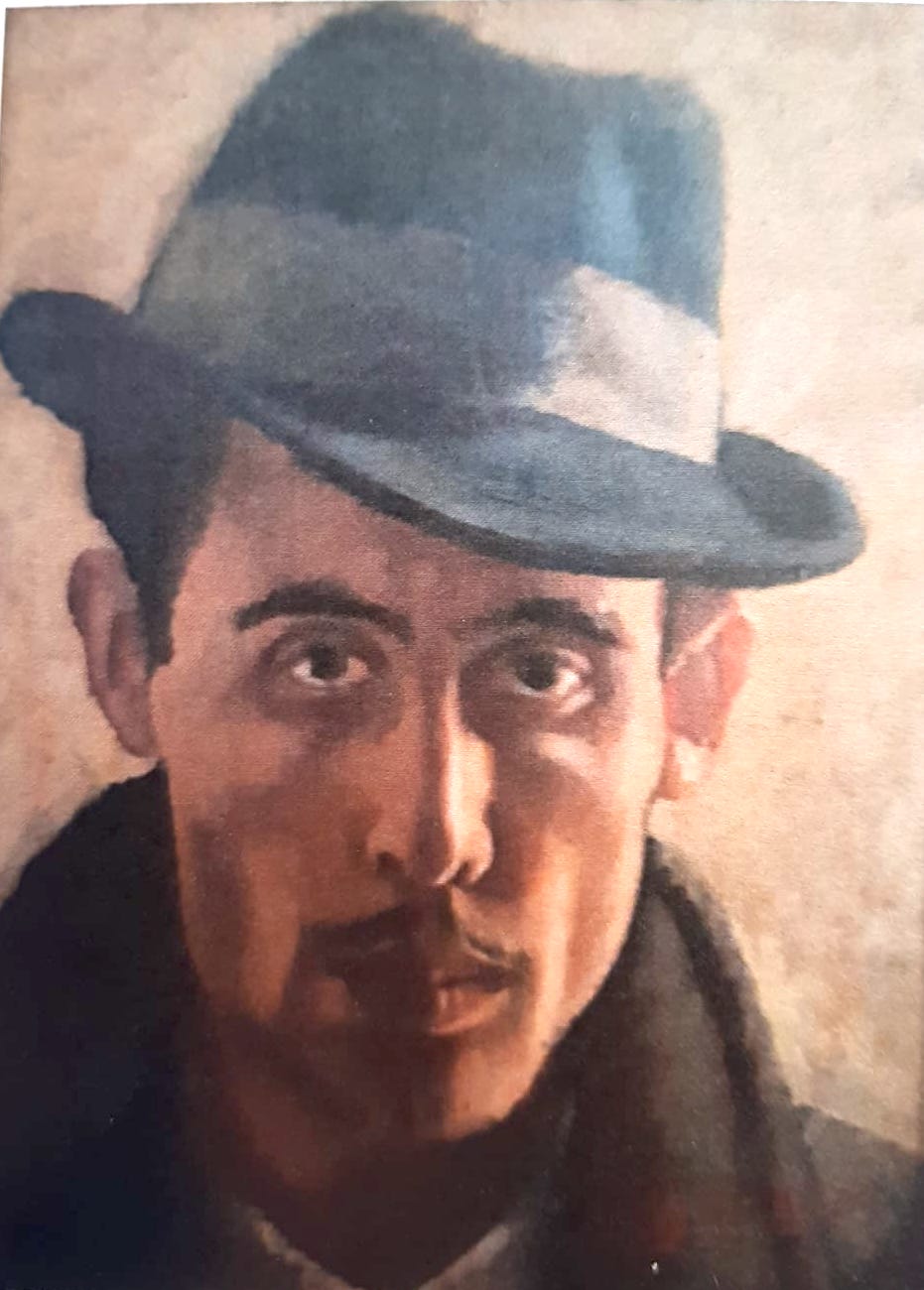
Minardo was a painter and multifaceted artist. Born in Ragusa in 1916, he passed away in 1982.
The Ragusa municipal administration, led by Mayor Giuseppe Cassì, welcomed the request made by the artist's daughters, a request that was supported by several figures from the worlds of culture, journalism, and art.
The proposal was then accompanied by a report by Dr. Benito Corradini, President of the La Sponda International Academy, who highlighted the great artistic and cultural depth of Maestro Giuseppe Minardo: "An artist of great value both for his remarkable interpretative skills and for his elegant message, with a strong proactive tone that has always upheld the true values of the message of Art and Culture, as a moment of engagement for both the casual observer and the most astute professional art critic."
Ragusa will honor him, as he deserves, with a toponymic sign in everlasting memory.
Giuseppe Minardo, his story
One day before Christmas Eve 1916, Giuseppe Minardo was born in Ragusa Ibla, at number 48 Via Mercato.
His father was Teresio Minardo, a cabinetmaker and violin lover who tried his luck in New York (we are in the 1920s), but unfortunately in 1924, when his wife was expecting their fourth child, returning to Ragusa Ibla he died following a stroke, at the age of 33.
Giuseppe was eight years old and was already trying to support his family by making artistic wooden toys (rocking horses) in exchange, sometimes, for sacks of chickpeas and beans. Unfortunately, having had polio, he was left limping in one leg.
This tragedy, among other things, also led to his arrest at the age of 8. To get him out of prison, his mother, Anna Campo (then 25), had to sell the land on the current Santa Rosalia dam. This event marked his childhood, and for this reason he wanted to leave Ragusa Ibla.
He then went to Rome and graduated from the Academy of Fine Arts, his talent for painting being extraordinary. At the Academy of Fine Arts in Rome, he met the woman of his life, Vera Macht, a Prussian.
These were the years of war, hunger, and bombing. They married despite the difficulties, and in 1944 their son, Giovanni, was born. Unfortunately, he died at the age of six months while fleeing from East Prussia to Italy. Postwar Rome was a disaster, but her love for art and her beloved Sicily continued to permeate her thoughts.
In every brushstroke and every line, the light and color of his homeland are evident. In the 1950s, he frequented Rome's Via Margutta with its " 100 painters ," the Rome of the " baretto " and the " caffè Greco ," the beating heart of art. Poets, writers, critics, and literary figures met daily, and meetings and, above all, exhibitions were organized.
Art is the center of rebirth. Giuseppe Minardo's paintings focus on the Roman suburbs, on hardship, on degradation, but above all on humanity. During those years, he met Ugo Moretti, a writer, journalist, and author of books such as " Gente al Babuino ," " La ragazza in bibicletta ," and " Vento caldo ," to name a few. Ugo Moretti would go on to write countless critical essays on Minardo's painting.
This will be followed by texts by Elio Mercuri, Sebastiano Carta, Giuliano Campolonghi, the writer Luigi De Pascalis (author of countless books, the latest being “ Il Sigillo di Caravaggio ”), Benito Corradini, director of the La Sponda gallery (Rome, Piazza del Popolo), and Aldo Incitti, Roman gallery owner and artistic director of the Il Babuino gallery in Rome.
Giuseppe Minardo has had many exhibitions in various galleries throughout Italy.
except micciché